If you walk through most warehouses in South Africa today, you’ll notice something has changed quietly over the past few years. Diesel forklifts are becoming less common, and the machines humming along the aisles are increasingly powered by lithium batteries. For anyone running a warehouse or logistics operation, this shift raises a fair question: what exactly does lithium battery technology do differently, and is it worth paying attention to? This blog walks through the basics in plain terms, so you can understand what’s behind the change and what it might mean for your own warehouse and logistic operation.
How a Lithium Forklift Battery Actually Works?
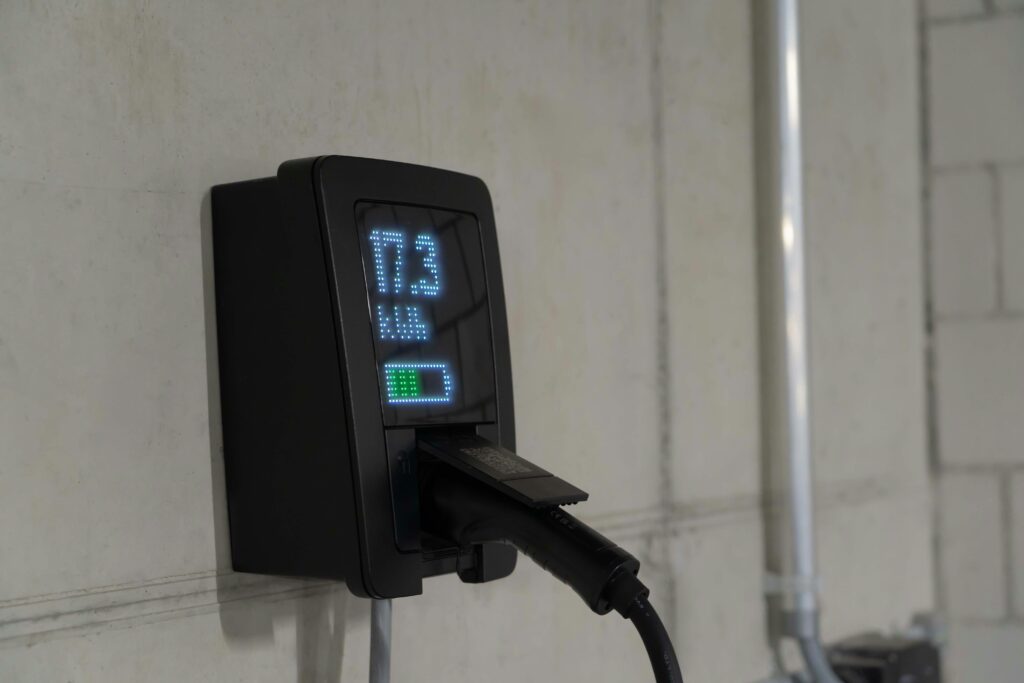
At a basic level, a lithium forklift battery stores and releases energy through lithium-ion technology. It uses the same basic technology found in electric vehicles. However, it is built for the higher power and demanding conditions of forklift operations. Inside the battery, a management system keeps a close watch on temperature, charge level, and the health of individual cells. This constant monitoring is part of why lithium batteries behave so differently on the warehouse floor. They don’t need the manual checks that older battery types require, and they’re built to handle repeated partial charging without losing performance over time.
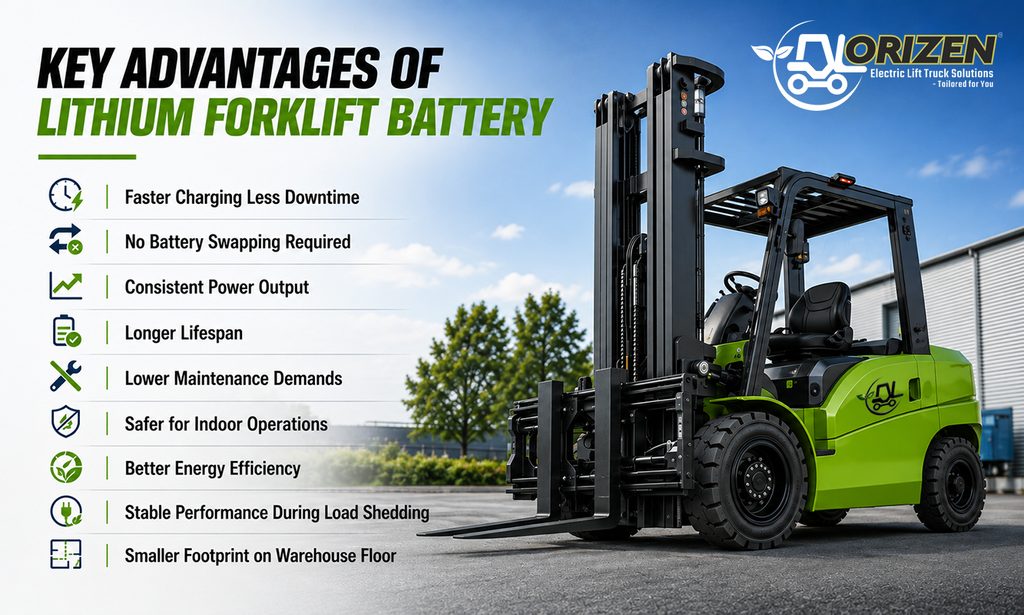
Key Advantages of Lithium Forklift Battery
Faster Charging, Less Downtime: Lithium batteries charge much quicker than lead acid batteries. A quick top-up during a tea break or shift change is often enough to keep a forklift running, so operators spend less time waiting and more time working.
No Battery Swapping Required: Multi-shift warehouses usually keep spare lead acid batteries on hand for swaps. Lithium batteries remove this need entirely, freeing up floor space and cutting the labor that goes into changing batteries throughout the day.
Consistent Power Output: Lead acid batteries lose power as they drain, which can slow lifting speed and travel during the second half of a shift. Lithium batteries deliver steady power from full charge to empty, so performance stays the same all day.
Longer Lifespan: Lithium batteries typically last several times longer than lead acid batteries, even with frequent partial charging. Fewer replacements over the years means fewer disruptions and lower long-term battery costs.
Lower Maintenance Demands: There’s no need for watering, equalizing charges, or the regular upkeep that lead acid batteries call for. This suits busy South African warehouses where maintenance staff and time are often stretched thin.
Safer for Indoor Operations: Lithium batteries produce no gas during charging, unlike lead acid batteries. This means no dedicated, ventilated charging room is required, which is useful for smaller sites or facilities with limited space.
Better Energy Efficiency: Lithium batteries convert more of the electricity they draw into usable power, with less wasted as heat. Over time, this can mean lower electricity costs, which matters given rising energy prices in South Africa.
Stable Performance Through Load Shedding Disruptions: Because lithium batteries charge faster and don’t need long, uninterrupted charging cycles, they cope better with the shorter or irregular charging windows that load shedding can create.
Smaller Footprint on the Warehouse Floor: Lithium batteries are generally more compact than lead acid equivalents for the same power output. This can free up space in tight warehouse layouts, which is often at a premium in South African logistics hubs.
What Sets It Apart from Older Battery Types
The biggest difference between lithium and older lead-acid batteries comes down to how they handle charging and daily wear. A lead-acid battery generally needs a full charge cycle, followed by a rest period, before it can be used again. Lithium batteries don’t work that way. They can be plugged in for short bursts, during a tea break or a shift change. And picked back up again without any negative effect on the battery’s lifespan. Warehouses in cities like Johannesburg, Durban, Pretoria and Cape Town running multiple shifts often find this flexibility changes how they schedule work altogether, since machines no longer need to sit idle waiting for a full charge.
“A forklift that’s always ready to work is worth more than one that’s always waiting to charge – Orizen Group.”
Lead Acid vs. Lithium-Ion Forklift Battery
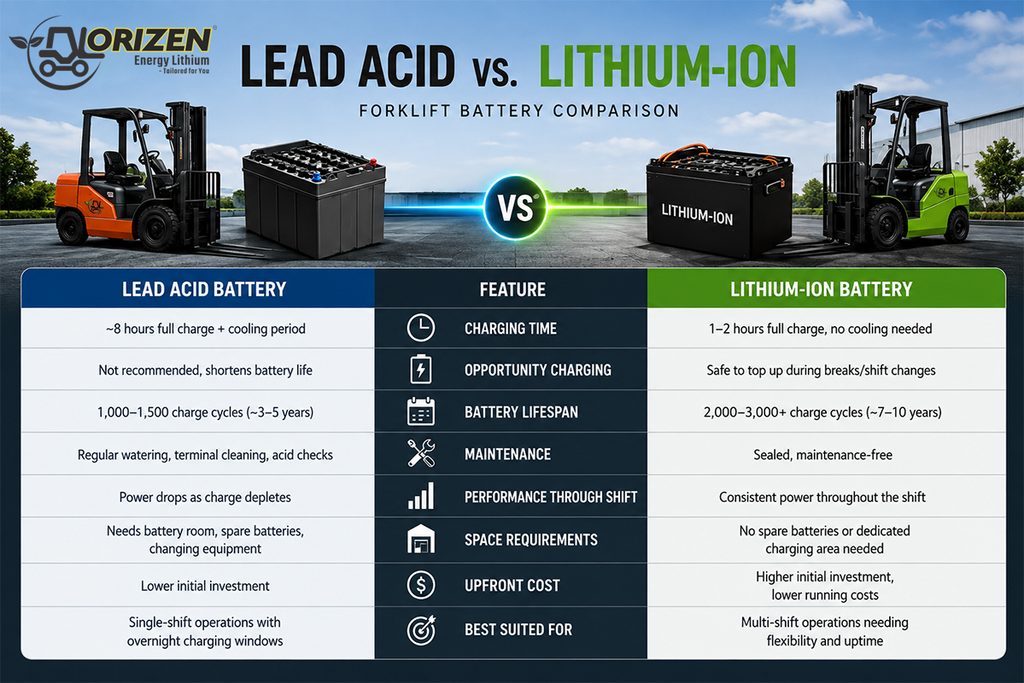
Choosing the right battery for your forklift fleet is a decision that affects far more than just power output. It shapes how long your equipment stays in service each day. How much time your team spends on maintenance, and how smoothly your warehouse runs across busy shifts. Lead-acid batteries have powered material handling equipment for decades and remain a familiar, budget-friendly option for many businesses. Lithium-ion batteries, on the other hand, have gained ground quickly thanks to faster charging, longer lifespans, and far less upkeep. Neither option is automatically the better choice. The right fit depends on how often your forklifts run, how many shifts your warehouse operates, and what your maintenance team can realistically manage. This blog breaks down the real differences between the two, so you can make a decision based on how your operation actually works, not just on which battery sounds more modern.
What This Means for Daily Warehouse Operations
For a warehouse manager, the practical impact of switching to lithium batteries shows up in a few clear ways. Machines tend to stay available for longer stretches of the day, since there’s no need to swap out a depleted battery for a charged one. There’s also less physical space needed for battery storage and charging stations. Since fewer spare batteries are required overall. On top of that, the maintenance side becomes simpler. There’s no need to check water levels or handle acid top-ups, which reduces both the workload and the safety risks tied to battery upkeep.
Things Worth Checking Before You Decide
Before switching to lithium battery forklifts, it’s worth going through a short checklist to make sure the move actually fits your operation:
Check your current charging setup: Lithium batteries often require different charging equipment than lead-acid systems, so it’s worth confirming what your site can support.
Look at your shift patterns: Businesses running two or three shifts tend to benefit the most from the fast, flexible charging lithium offers.
Think about your budget over time: The upfront cost is usually higher, but running and maintenance costs are often lower across the life of the battery.
Consider your storage conditions: Lithium batteries generally handle temperature changes well, which matters if your warehouse includes cold storage areas.
Ask about warranty and support: A good supplier should be able to explain expected battery life and what support looks like if something goes wrong.
Going through these points before making a decision can save a lot of guesswork later.
Is It the Right Fit for Your Business?
Not every warehouse needs to switch overnight, and that’s a reasonable position to take. A smaller operation running a single shift with plenty of downtime might not see a big enough difference to justify the change right away. But for busier operations, especially those running long hours or multiple shifts, the combination of less downtime, simpler maintenance, and more flexible charging tends to make a real difference over time. It often comes down to how hard your equipment works on an average day, and how much that downtime actually costs you when a forklift isn’t available.
Conclusion
Lithium battery technology has changed the way warehouses across South Africa think about keeping their equipment running. It’s not a change made for the sake of following a trend. It’s a practical shift that affects uptime, maintenance, and daily scheduling in ways that add up over time. If you are weighing up whether this technology fits your operation, The Orizen Group can walk you through the details and help you figure out what makes sense for the way your warehouse actually works.