Every warehouse needs forklifts to keep goods moving. But owning a full fleet is not always the smartest plan. Many businesses now choose to hire electric forklifts instead of buying them. Hire keeps money free for other needs and gives access to well-kept machines. In this blog, we look at why smart warehouses in South Africa are making this choice. You will also see when hire makes sense and what to check before you decide.
What Owning a Forklift Fleet Really Involves
Buying a forklift looks simple at first. You pay for the machine and start using it. But the spending does not stop there. You also carry the load of servicing, repairs, spare parts and insurance. Batteries wear out and need replacing. When a machine breaks down, you must find a technician and wait for the fix. Then there is the question of use. Some warehouses in Johannesburg and Durban see quiet weeks and very busy weeks. A forklift you own sits idle in the slow weeks. Yet the money tied up in it stays locked. This can strain cash flow. Many owners feel this pressure only after the purchase is done
Why Electric Forklifts Suit Modern Warehouses
Electric forklifts are a natural fit for indoor work. They produce no exhaust fumes, so the air inside the warehouse stays cleaner. They are also quiet. Staff can talk and hear warnings without shouting. This matters in busy distribution hubs in Kempton Park, Midrand and Germiston. Electric models also have fewer moving parts than diesel machines. That means simpler upkeep and less time off the floor. Lithium battery options can charge fast and fit around power interruptions. These points suit food storage, retail stock, parcel handling and general logistics
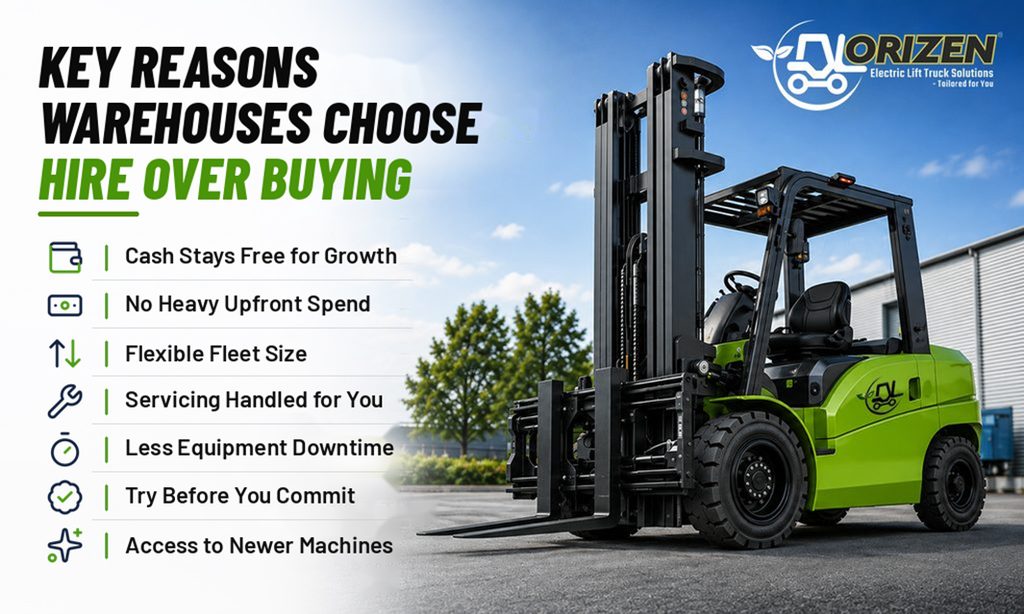
Key Reasons Warehouses Choose Hire Over Buying
Here are the main reasons smart warehouses pick hire.
Cash stays free. Money that would go into a purchase can be used for stock, staff or growth.
No heavy upfront spend. You can start using equipment without a large one-time payment.
Flexible fleet size. Add machines when orders rise and return them when work slows.
Upkeep is handled. The hire partner takes care of servicing, which saves you time and effort.
Less downtime. A good hire partner can check or replace a faulty machine fast.
Try before you commit. Test electric forklifts in your own warehouse before choosing a long-term plan.Newer machines. Work with up-to-date models without waiting for old equipment to be paid off.
How Forklift Hire Helps During Busy Seasons
Peak periods put heavy pressure on warehouses. Think of the festive season, Black Friday and month-end rushes. Orders come in fast and stock must move fast. Buying extra forklifts for a few busy weeks rarely makes sense.
With hire, you add machines only when you need them. A retailer in Pretoria can bring in extra units for the rush. A logistics firm in other cities can do the same for a large short-term contract. When the season ends, the extra equipment goes back. Your fleet stays the right size all year.
“Whether you run a growing distribution centre in Gauteng, a busy cold store in Cape Town or a fast-moving warehouse in Durban, Orizen Group brings you clean, quiet and dependable electric forklifts on flexible hire.”
What You Get with a Hire Agreement
A good forklift hire agreement gives you more than a machine. Here are what businesses usually look for.
Range of equipment. Electric forklifts, pallet trucks, reach trucks, stackers and tow tractors, based on your task.
Battery and charger support. Lithium or lead acid options with matching chargers.
Regular servicing. Planned checks keep machines safe and reliable.
Short and long terms. Pick a forklift hire period that suits your project.
Local support. Ask about help in your area, such as Johannesburg, Pretoria, Durban or Cape Town.
Clear terms. Know what is covered before you sign.
When Buying Still Makes Sense
Hire is not right for everyone. Some businesses use forklifts every hour of every day for many years. They may prefer to own their fleet. Others need a special machine for one fixed task. In those cases, buying forklift can be a fair choice.
Still, many warehouse and logistic businesses do not fall in this group. If your workload changes often, hire is usually the better fit. It also suits owners who want less stress around upkeep. Hire gives you time to see how much equipment you truly need. Compare both options based on your real work, not on habit.
Key Takeaways for Warehouse and Logistics Business Owners
This blog gives a clear picture if you manage a warehouse, run a logistics business or own a growing company.
- Hire keeps your cash free for stock, staff and growth.
- Your fleet can grow or shrink as your orders change.
- Electric forklifts bring cleaner air, quieter work and simpler upkeep.
- Extra machines are ready for the festive rush or a large contract.
- Buying still suits businesses that use forklifts all day for many years.
- Compare both options with your real workload in mind.
Conclusion
Smart warehouses look at more than the machine. They look at flexibility, upkeep and the pressure on their budget. Electric forklift hire answers all three. It gives you clean, quiet equipment without the long-term burden of ownership. If you want to explore electric forklift hire for your warehouse, Orizen Group is ready to help. Contact Orizen Group in South Africa today and find the right machines for your operation.